
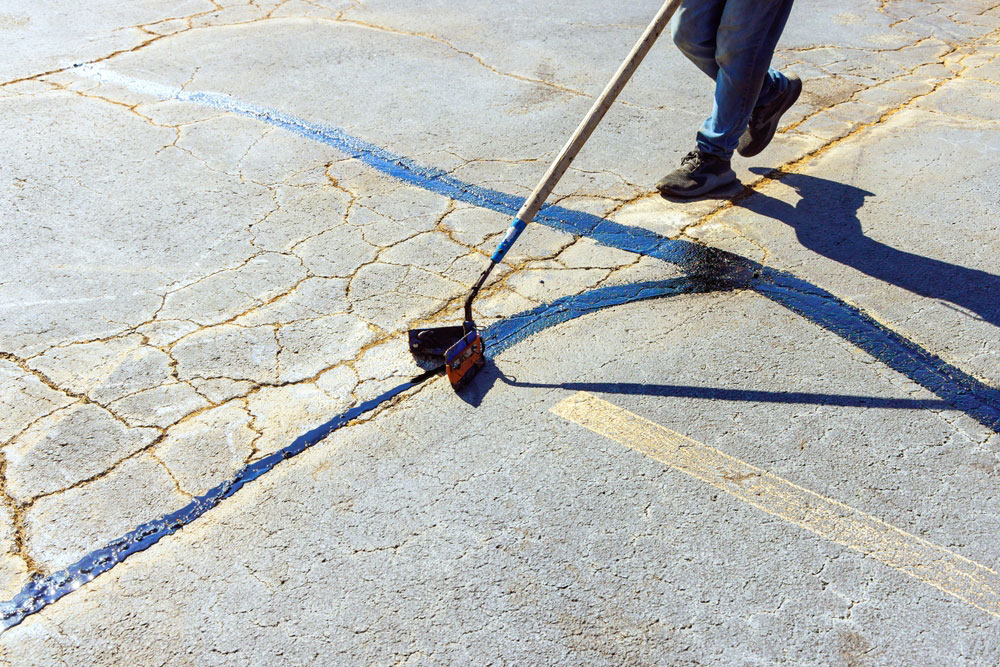
Concrete cracks are almost inevitable in Schertz’s climate and soil conditions. The key is understanding which cracks are cosmetic, which are structural, and which method fixes each one properly and permanently.
Type 1 — Hairline Surface Cracks
Hairline cracks less than 1/16 inch wide that run along the surface without depth are almost always shrinkage cracks from the initial drying process. They are cosmetic, not structural. Best fix: quality penetrating sealer applied during routine maintenance prevents water infiltration.
Type 2 — Moderate Width Cracks (1/8 to 1/4 inch)
Cracks in this range allow meaningful water infiltration that erodes sub-base material over time. Best fix: rout the crack to create a clean, consistent channel and fill with flexible polyurethane joint sealant. Flexible sealant accommodates minor ongoing movement without re-cracking. This is a same-day repair our concrete repair team completes routinely.
Type 3 — Structural Through-Cracks
Cracks wider than 1/4 inch that penetrate the full depth of the slab, especially with differential movement or vertical offset between the two sides, indicate structural failure. Best fix: epoxy injection under pressure bonds the crack with tensile strength approaching the original concrete. For cracks subject to ongoing movement, polyurethane injection maintains a flexible seal. Panel replacement may be warranted if multiple adjacent structural cracks are present.
Type 4 — Spalling (Surface Flaking)
Spalling occurs when the top layer of concrete detaches in flakes or chips — typically caused by freeze-thaw cycling, deicing salt use, or poor original curing. Best fix: surface preparation by shot blasting or scarifying, followed by polymer-modified bonded concrete overlay. The overlay bonds to the sound substrate and creates a fresh, durable surface finish.
Type 5 — Settled/Sunken Panels with Cracking at Edges
When a panel has settled below adjacent slabs and cracking runs along the settled edge, sub-base erosion or voids beneath the slab are the cause. Best fix: polyurethane foam injection lifts the panel back to grade and fills voids beneath the slab simultaneously. Cures in minutes, driveable same day.
Why Matching the Fix to the Crack Type Matters
Applying rigid epoxy to an actively moving crack will re-crack within one season. Sealing structural cracks without addressing sub-base voids allows the panel to continue settling. Our Schertz concrete repair specialists diagnose crack type and cause before recommending any repair — ensuring your investment holds for years, not months.
Warning Signs That a Crack Needs Immediate Attention
Cracks wider than 1/4 inch; cracks that are actively growing in length or width; vertical offset between crack sides when walked on; cracks accompanied by soft spots or slab rocking. Contact our repair team for a free inspection if you observe any of these conditions.
Call our Schertz concrete repair contractors today for a free crack assessment and written repair estimate.